

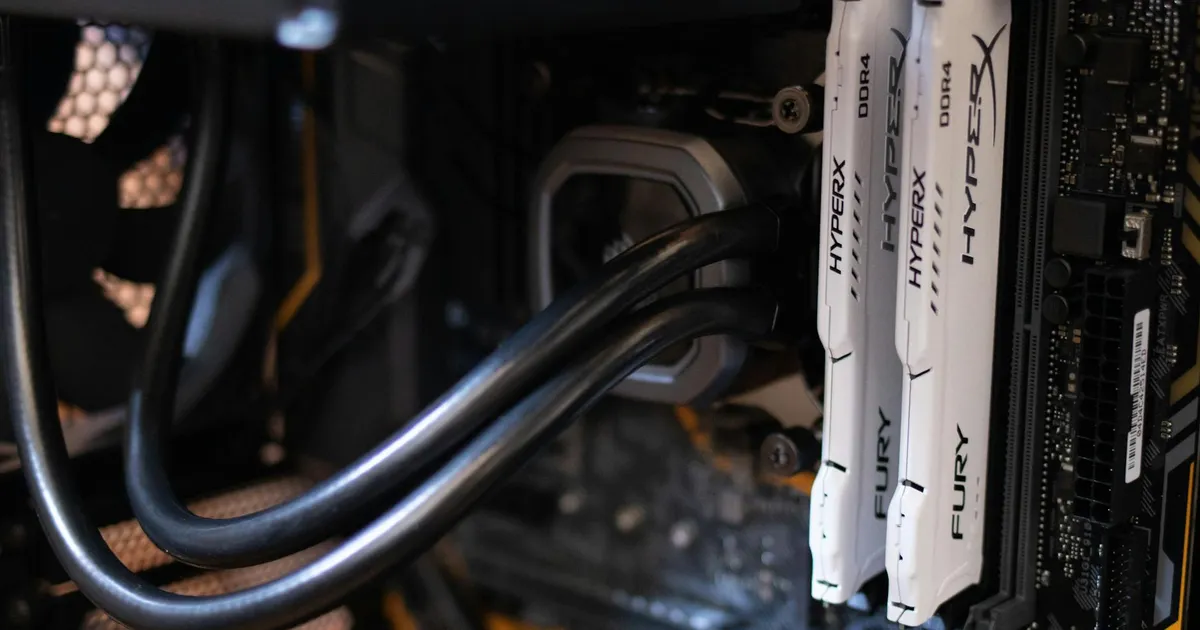
The AI buildout has a cost and ordinary businesses are paying it
Somewhere between the breathless promises of an AI-powered economy and the reality of running a business, there is a procurement manager staring at a quote for new servers that costs 60% more than it did six months ago.
The global memory market has been structurally reshaped by AI demand. Samsung, SK Hynix, and Micron, the three companies that control virtually all memory chip production, have rationally redirected their manufacturing capacity toward high-bandwidth memory (HBM) for AI data centres. HBM chips require roughly three to four times the silicon wafer capacity per gigabyte compared to standard DRAM. Every wafer allocated to training the next large language model is a wafer that does not become the RAM in your next laptop or the SSD in your next file server.
The numbers are brutal. TrendForce data shows conventional DRAM contract prices surged 90-95% quarter-on-quarter in Q1 2026, the largest single-quarter jump on record. Enterprise SSD prices rose 53-58% in the same period. Samsung’s 32GB DDR5 modules now retail at $239, up from $149 just months earlier. HP has disclosed that DRAM now accounts for 35% of its PC build cost, up from 15-18% a quarter before.
This is not a blip. SK Hynix reports its HBM, DRAM, and NAND capacity is sold out through end of 2026. Micron acknowledges it can meet only about two-thirds of memory requirements for some customers.
Big buyers get priority, everyone else gets the scraps
The market has split into two tiers. A DigiTimes analysis describes roughly 100 top-tier buyers, cloud providers, major automakers, Apple, Samsung, with enough financial weight to secure supply and resist price hikes. Then there are more than 190,000 small and mid-size enterprises fighting over what remains. Memory prices have begun shifting on an hourly basis, with manufacturers increasingly demanding prepayment or cash transactions before confirming orders.
Ben Yeh, Principal Analyst at Omdia, notes that “for lower-priced products, there is less margin room to absorb rising costs”. Global PC shipments are forecast to fall 12% in 2026 to 245 million units as the price shock ripples through. IDC has characterised the situation as “not just a cyclical shortage but a potentially permanent, strategic reallocation” of silicon wafer capacity.
SK Hynix Chairman Chey Tae-won warned at Nvidia’s GTC conference that the shortage could persist through 2030.
NZ providers are already telling clients to buy now
Softsource vBridge, one of New Zealand’s larger IT solutions providers, has published explicit guidance warning that SSD and RAM components are sold out through to 2027, prices have risen weekly since January 2026, and factory cost increases range from 10% to 60% depending on model and configuration. Their advice is blunt: shorten approval loops, secure hardware already landed in NZ at older pricing, and fast-forward 2026 refresh plans before further increases expected through July.
Laura Czajkowski, Head of Community at database platform Percona, calls the consumer market “the canary in the coal mine” and frames the core question facing IT teams simply: “if the compute in my budget now has less RAM, how do I make it work?”
The awkward irony for NZ
New Zealand is simultaneously being urged to invest in AI and bearing the cost consequences of everyone else doing the same. A $3.5 billion Datagrid data centre project near Invercargill will consume 280 megawatts of power. Technology adviser Mark Laurence has warned that NZ is “AI illiterate” and risks being left behind economically.
But the businesses expected to adopt AI tools are the same ones now paying sharply more for the basic hardware those tools run on. NZ Treasury’s November 2025 economic update showed the services sector in contraction every month since February 2024. The capital goods price index rose 1.1% in the December 2025 quarter even before the worst of the memory price surge hit.
An EU complaint has been lodged against Samsung, SK Hynix, and Micron alleging anticompetitive reallocation of supply toward AI buyers. Any regulatory remedy is years away.
Businesses that treat this as a temporary supply hiccup and defer hardware investment are gambling that prices will come down. The chairman of the world’s largest HBM manufacturer says they will not, at least not before 2030. The smarter bet is to lock in what you can now and plan IT budgets around a permanently higher cost base for memory and storage.
Sources
- ByteIota: RAM Shortage 2026: AI Data Centers Price Consumers Out
- CSSI: The AI Memory Crunch: What Rising Computer Memory Prices Mean for Your Business (2026-03-10)
- Yahoo Finance: AI memory crunch forces DRAM market into hourly pricing model
- IT Brief NZ: PC shipments to plunge in 2026 on memory shortages
- Softsource vBridge: Why hardware costs are rising
- EconoTimes: SK Hynix Chairman Warns of Memory Chip Shortage Through 2030 Amid AI Boom
- NZCity: Valkey’s lean memory tactics amid global DRAM crunch
- RNZ: AI illiterate: NZ at risk of being left behind as data centre plans move forward
- NZ Treasury: Fortnightly Economic Update – 20 November 2025 (2025-11-20)
- Scoop: Business Price Indexes: December 2025 Quarter
- EU Citizens’ Initiative Forum: Regulation of computer hardware market and consumer protection