

From paddock to platform in five years
Halter launched on its first commercial farm in late 2020. Five years later, the Auckland-based agritech company has raised $377 million in a round led by Peter Thiel’s Founders Fund, pushing its valuation to $3.3 billion. That makes it the largest venture capital raise by any New Zealand-founded company, ever.
The speed is striking. Halter closed a $100 million Series D in June 2025 at a $1 billion valuation. It has since tripled. NBR reports the company was touting a valuation north of $3.4 billion in discussions with investors, and the round was heavily oversubscribed despite a weak period for agritech globally. When Peter Thiel’s fund leads a raise in a sector others are retreating from, it tells you the bet is company-specific, not thematic.
The economics that attracted the money
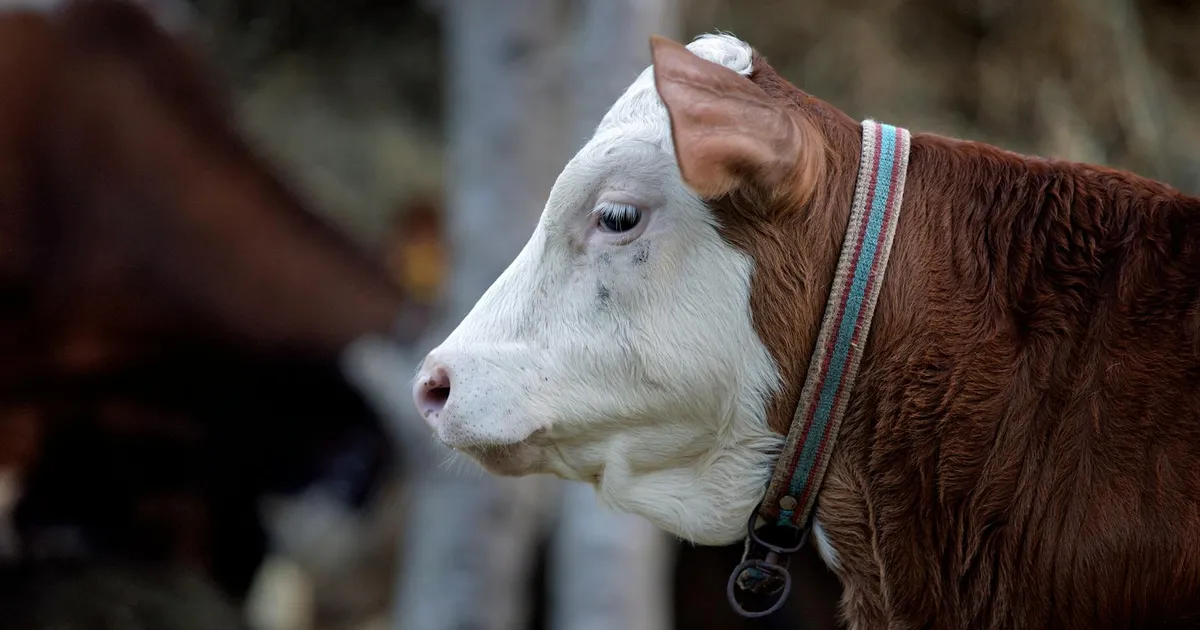
Halter makes solar-powered GPS collars for cattle. Farmers use them to set virtual fences and monitor herd health remotely, replacing the cost and labour of physical fencing. The collars use GPS, audio cues, vibration and a small electric pulse, described as a fraction of the charge of a standard electric fence, to guide animal movement.
The unit economics are what make venture investors lean forward. Halter’s system costs approximately $92 per cow per year versus $188 for traditional fencing. The subscription model charges farmers $5 to $9 per animal per month, generating recurring revenue that scales with every collar deployed. The company now manages over 600,000 cattle across New Zealand, Australia and the United States, operating on more than 1,000 farms.
The Agent Times, drawing on Bloomberg reporting, frames the collars as nearly 700,000 autonomous physical AI agents generating subscription revenue across three continents. That framing, physical AI rather than farm software, goes a long way toward explaining the valuation multiple.
America’s cattle crisis is Halter’s open door
The US market is where the real upside sits, and the structural tailwinds are hard to argue with. The American cattle herd has shrunk to its smallest size in 75 years, squeezed by drought, rising costs and an ageing workforce. Over half of US ranchers are aged 55 or older. Halter already supports over 200 ranchers across 22-plus states with more than a dozen sales reps on the ground.
The pitch to American ranchers is simple: manage a larger herd with fewer people. In a market where labour is structurally scarce, that is not a technology upgrade. It is a survival tool.
The ‘excessive humility’ problem
Founder Craig Piggott, who grew up on a dairy farm and later worked at Rocket Lab before starting Halter in 2016, has been pointed about what holds New Zealand founders back. In a Newsroom interview last December, he said: “We try to walk this fine line of being humble enough to ask questions and learn and be wrong and do all of those things, and not become entitled. But excessive humility, which gets in the way of trying or being openly ambitious, that’s definitely a problem.”
He is right, and the data backs him up. Halter joins only Rocket Lab and LanzaTech as New Zealand-founded companies to have reached a US$1 billion private valuation while remaining independent. The pattern in this country has been to sell early to offshore acquirers rather than hold and scale. Halter has so far resisted that temptation. Early investor Icehouse Ventures reports a 200x appreciation on its seed fund investment. That is the kind of return that attracts the next wave of angel investors and ambitious founders into the New Zealand startup pipeline.
The question nobody is asking loudly enough
Most coverage is treating this as a feel-good milestone. It is, but the harder question deserves airtime. Halter tripled its valuation in under a year. It has not disclosed revenue publicly. The agritech sector broadly has struggled, and the speed of the re-rating is unusual even by venture capital standards. Some of this premium reflects genuine commercial traction. Some of it likely reflects the current market appetite for anything framed as a physical AI business.
That does not diminish what Piggott and his approximately 200 staff have built. The oversubscription and Founders Fund’s involvement suggest the fundamentals are real. But private market valuations are not public market scrutiny, and the true test comes when Halter either lists or gets acquired.
Whether this raise is remembered as the start of something lasting, or a peak, depends on one thing: whether Halter keeps scaling in the US without selling out. Piggott has made his position clear. Now he has $377 million to prove it.
Sources
- RNZ: New Zealand startup Halter valued at $3.3 billion in major funding round
- Stuff: Halter’s $3.3bn valuation marks major milestone for NZ tech
- NZ Herald: Peter Thiel backs Halter in record $377m funding round
- BusinessDesk: Halter’s $3.3bn valuation signals new era for NZ startups
- Interest.co.nz: Record funding round validates Halter’s agricultural AI technology
- NBR: Halter touting new valuation of more than $3.4 billion
- Tracxn: Halter 2026 company profile
- The Agent Times: Founders Fund backs AI cattle collar maker Halter
- Newsroom: Excessive humility is a problem – Halter founder on success in a changing America (2025-12-04)
- Icehouse Ventures: Reflections and lessons from our journey with Halter