

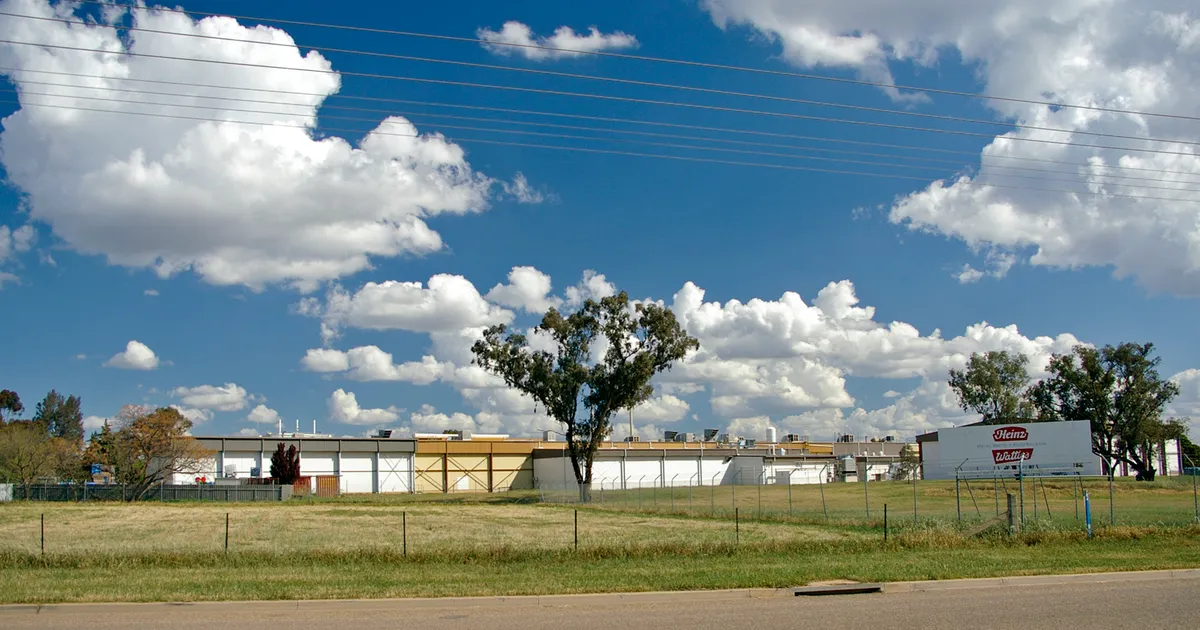
Heinz Wattie’s has proposed closing its Auckland, Christchurch, and Dunedin manufacturing facilities and ending packing operations at its Hastings King Street site. Approximately 350 jobs are at risk. Products being axed include frozen vegetables, Gregg’s Coffee, and dips under the Mediterranean, Just Hummus and Good Taste Company brands.
Most outlets are covering this as a jobs story. It is not. It is a cost story, and the cost story is far more alarming.
A 40% hit in five years
Managing Director Andrew Donegan did not hide behind euphemism. He cited close to a 40% increase in operating costs over the past five years, pointing to gas, energy, diesel, and coffee input prices. In the company’s public statement, he said “the manufacturing environment in New Zealand has become increasingly difficult amid high inflation worldwide and industry challenges placing ongoing pressure on commercial performance.”
That is not vague restructuring language. Frozen vegetables and commodity coffee are low-margin, high-volume product lines. When your operating costs jump 40% and your products compete on price rather than provenance, the maths stops working. It is that simple.
Notably, Heinz Wattie’s is not exiting premium New Zealand-origin products where “made in NZ” commands a price premium. It is pulling out of exactly the categories where offshore scale and cheaper energy win on unit economics. The company is not abandoning New Zealand because it wants to. It is abandoning the product lines where New Zealand can no longer compete.
The 200 growers nobody is talking about
The 350 headline jobs understate the disruption. More than 200 contracted growers across New Zealand supply into Heinz Wattie’s frozen vegetable operation. When that production ceases, those contracts vanish. These are predominantly small and medium agricultural businesses, many in Hawke’s Bay, that planted crops specifically for processing supply. They cannot easily redirect to alternative buyers because the domestic market for processing-grade vegetables is thin.
This is a secondary economic shock that barely featured in initial coverage. A food manufacturer closing a factory is visible. Two hundred growers quietly losing their primary customer is not.
The EMA says more exits are coming
The Employers and Manufacturers Association is not treating this as an isolated event. EMA head of advocacy Alan McDonald warned of ripple effects through supplier and contractor networks across all three affected cities, then went further: “We keep hearing rumblings of others getting ready to exit, significant-sized manufacturers as well as smaller ones.”
McDonald pointed to de-industrialisation driven by very high electricity prices as the structural factor undermining manufacturing viability. That framing matters. This is not a Kraft Heinz global strategy decision or a one-off corporate restructure. It is the predictable result of an energy cost environment that has been allowed to deteriorate across multiple governments, and the EMA is signalling that a pipeline of similar announcements is building behind this one.
Decades of loyalty, 45 minutes of notice
E tu Union director Finn O’Dwyer Cunliffe called the proposal “a huge blow to workers” and noted the union received just 45 minutes notice before announcements went out across sites. E tu delegate Kathy Perrin has 46 years of service at the company. The average length of service among affected workers is around 30 years. Some seasonal workers with more than two decades of tenure face redundancy without financial compensation.
These are not transient employees cycling through a gig economy. They are the kind of long-service manufacturing workers that politicians love to reference in speeches about the backbone of the economy, right up until the factory closes.
The floor or the beginning
The real question for every business in manufacturing, processing, or agricultural supply is whether this is the bottom. The evidence suggests it is not. Energy costs remain elevated. The structural factors McDonald identified have not been addressed by any credible policy programme. And the products being cut from Wattie’s lineup are the same commodity-adjacent categories where dozens of other New Zealand processors compete on cost against offshore alternatives with better scale and cheaper inputs.
New Zealand has spent years watching manufacturing shrink and treating each closure as an isolated event. Wattie’s is not an isolated event. It is the most recognisable name on a list that the EMA says is getting longer. At some point, the country has to decide whether it wants a manufacturing sector or whether it is content to watch one exit at a time until there is nothing left to close.
Sources
- RNZ: Heinz Wattie’s proposes closure of three manufacturing facilities, impacting 350 jobs (2026-03-11)
- Inside FMCG: Heinz Wattie’s to close three NZ factories (2026-03-11)
- NZ Herald: Heinz Wattie’s to shut Auckland, Christchurch, Dunedin factories, 350 jobs hit (2026-03-11)
- Newstalk ZB: Expert warns more closures to come after Heinz Wattie’s shutters facilities (2026-03-11)
- 1News: Heinz Wattie’s looks to ditch frozen veges, 350 jobs affected (2026-03-11)