

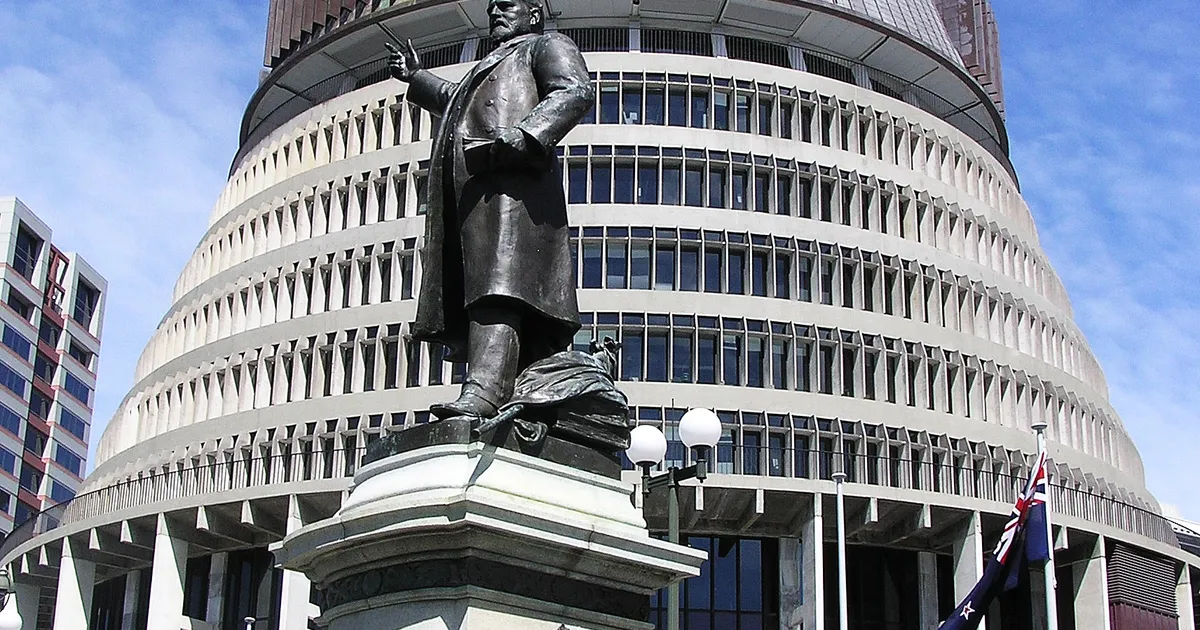
Chris Bishop says the system is “too fragmented and too uncoordinated”. His solution is the Ministry of Cities, Environment, Regions and Transport, a new super-agency that absorbs the Ministry for the Environment, the Ministry of Housing and Urban Development, the Ministry of Transport, and local government functions from the Department of Internal Affairs. It covers roughly 1,300 FTEs and goes live on 1 July 2026.
The pitch is integration. The reality is that the government is asking one agency to restructure internally, maintain regulatory momentum, and deliver the most ambitious planning reform in decades, all at the same time. Nothing in the evidence base suggests that will work.
We already ran this experiment with MBIE
New Zealand’s closest precedent is the Ministry of Business, Innovation and Employment, created in 2012 by merging four agencies. Treasury’s own 2024 review of MBIE found the agency’s size could deliver economies of scale but “cautioned that addition of work programmes and portfolios risked making MBIE unwieldy and fostered internal competition for policy resources.”
The government was aware of that finding when it designed MCERT. Transporting New Zealand Chief Executive Dom Kalasih, who is broadly supportive of the rationale, cited the MBIE review directly and warned that “avoiding similar risks for MCERT will require careful management.”
Internationally, the track record is worse. The UK merged transport, environment and local government from 1997 to 2002, almost exactly the same combination of functions. It lasted five years before being reversed because clashing agency cultures slowed progress on major reforms. Australia’s sprawling DITRDCA, spanning infrastructure, transport, regional development, culture and the arts, is routinely cited as an example of a department that struggles to retain specialist knowledge across too many mandates.
Industry is already watching the clock
The concern from business is not abstract. The Imported Motor Vehicle Industry Association’s Chief Executive Greig Epps warns the merger [“risk[s] slowing delivery and undermining specialist policy work”](https://autotalk.co.nz/mega-ministry-risks-stalling-transport-and-vehicle-policy-via-says/) because in large mergers, “important projects are delayed or deprioritised while attention turns inward, towards structure, leadership appointments, and back-office consolidation.”
VIA is working on the Clean Vehicle Standard review and emissions standards that require “clear ministerial direction and policy focus now, not after the dust settles from an agency reshuffle.” That is a concrete regulatory pipeline at risk of stalling.
Before the merger was announced, the EPA was making genuine progress. On 30 June 2025, there were 96 applications in the queue, down 21% from 121 a year earlier. The EPA decided 62 release applications in 2024/25, the highest total since 2018/19. Disrupting the machinery behind that improvement is a real cost.
Environment risks becoming a footnote
Officials advised the government that consolidation risks losing environmental functions and perspectives. Environment Minister Penny Simmonds insists statutory obligations “transfer straight through”, which is technically correct but misses the point.
Epps frames the structural risk clearly: “There’s a tendency…to treat transport as the main lever for meeting environmental obligations. Transport matters, but it’s not the whole story.” When environment sits inside a ministry whose name puts Cities first and whose dominant mandate is housing supply and growth, institutional culture will do what institutional culture always does. The statutory text won’t change. The weight it carries inside the building will.
Three things at once is two too many
The government’s own framing is revealing. Public Service Minister Judith Collins has called MCERT a “test case” for further consolidation, saying the government would evaluate outcomes before deciding on other mergers. That is an admission it does not know whether this will work.
Meanwhile, the RMA reform programme declares the existing system “broken and no longer fit-for-purpose” and promises a simpler, faster consenting regime. It is the government’s signature economic reform, and it sits squarely inside MCERT’s remit.
The merger was announced one week before Christmas without headcount details. Bishop acknowledged the Public Service Commission had provided scenarios on revised staffing but refused to release them. For businesses waiting on consents, transport policy, or environmental approvals, the honest answer from Wellington is “we’ll find out.” That is not coordination. That is a gamble with someone else’s timeline.
Sources
- Newsroom: New bill to disband environment ministry as part of agency merger (2026-02-17)
- NZ Herald: Ministers deny number of job losses decided in proposed ministry merger
- NZ Legislation: Environment (Disestablishment of Ministry for the Environment) Amendment Bill
- Transporting NZ: Cautiously welcoming new super-ministry announcement
- Autotalk: Mega-ministry risks stalling transport and vehicle policy, VIA says
- RNZ: Greens concerned about potential loss of environmental functions in new mega-ministry
- EPA Quarterly Report to the Minister, April-June 2025
- Newsroom: New mega ministry a test case for potential mergers (2025-12-17)
- Ministry for the Environment: Better planning for a better New Zealand
- Liberty Scott: No to another mega-Ministry