

The biggest aquaculture bet in a generation
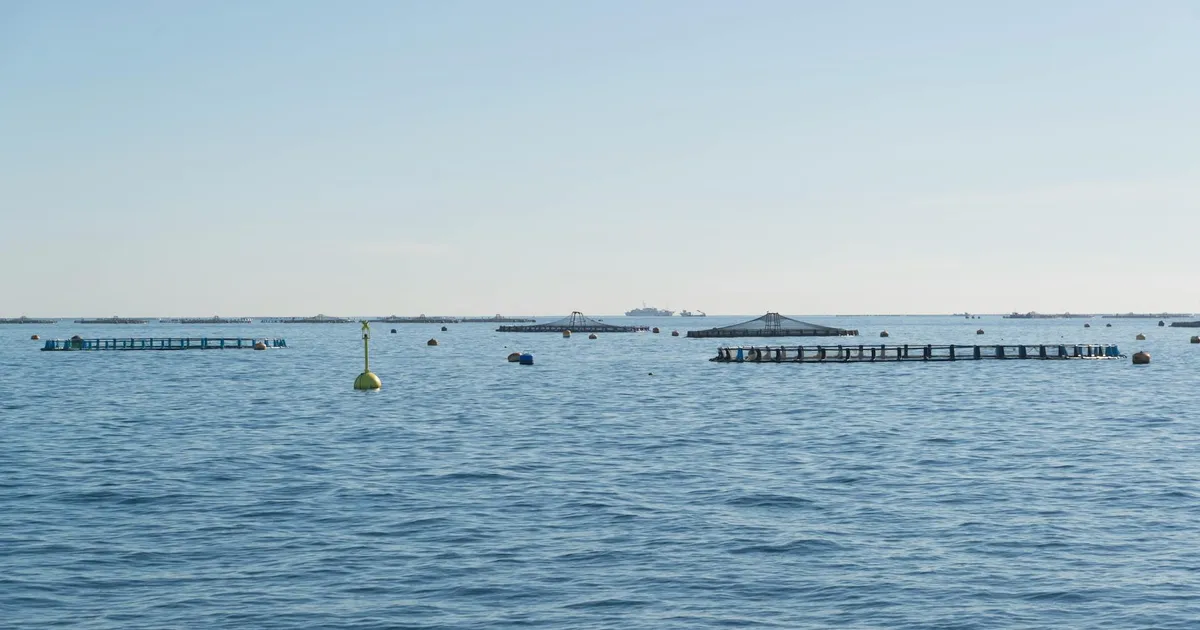
Ngāi Tahu Seafood Resources Ltd wants to build four marine farms off Stewart Island’s northern coast, producing 14,000 tonnes of salmon at full scale. The numbers are not modest. At capacity, the project would generate approximately $500 million in annual gross revenue, a 150-200% increase over current national salmon farming exports. Market Economics analysis estimates up to $841 million returned to households, $386 million flowing to Southland, and 480 full-time jobs.
This is the first major open-ocean salmon farming application to be tested under the Fast-track Approvals Act 2024. The outcome will set the template not just for one project, but for whether New Zealand’s regulatory system can process novel marine farming investment at all.
A $3 billion target with no credible path to get there
The government wants $3 billion in annual aquaculture sales by 2035, up from roughly $700 million today. To support that ambition, Oceans and Fisheries Minister Shane Jones has declared five new Aquaculture Settlement Areas in Southland totalling nearly 9,000 hectares, plus six more in Otago. Jones framed it as delivering “the certainty needed for jobs, opportunities and export dollars tomorrow.”
The industry is not buying it. Sanford, New Zealand’s largest seafood company, warned in its latest financial report that salmon farming expansion is “high-risk.” That is not an environmental group raising concerns. That is the country’s biggest listed seafood operator telling its shareholders that the consenting environment does not provide enough certainty to deploy capital. The gap between ministerial rhetoric and investor disclosure is where this story actually lives.
The Ministry for the Environment’s own Regulatory Impact Statement on marine farm consent duration is blunt: reconsenting processes create “significant regulatory burden” and “uncertainty around reconsenting processes and continuity of operation reduces investment confidence.” Even projects that get approved face a reconsenting cliff, with the current statutory maximum for marine farm consents sitting at just 35 years.
The fast-track system is already under legal fire
The Hananui application was deemed complete on 17 December 2025 and referred to an expert panel. A competing applications check confirmed no conflicts. So far, so functional.
But the broader fast-track system is already generating credibility problems. At the Waitaha River hydro-power hearing on the West Coast, the panel declined to invite Federated Mountain Clubs to participate. FMC president Megan Dimozantos said she was “surprised by the amount of influence the applicant seems to have over decisions that the panel’s making” and confirmed the group is seeking legal advice. For context, that same project drew 3,241 submissions opposed and just 23 in favour under normal processes.
If fast-track decisions start getting overturned in court, the system designed to provide certainty will deliver the opposite. Every aquaculture investor watching the Hananui process is also watching the Waitaha challenge.
Ngāi Tahu has been here before
This is the iwi’s second attempt. A previous application under Covid-era fast-track legislation was rejected after a panel found environmental costs outweighed benefits for a larger, differently located site. The new proposal is smaller in active footprint, with pens and feed barges occupying about 100 hectares of a 1,300-hectare site, and positioned on the northern rather than north-eastern coast.
The environmental complexity has not disappeared. Great white sharks aggregate at the Titi Islands, roughly 10km from the proposed site. The panel will need to weigh these factors against a project that, on pure economics, is transformational for Southland.
Ngāi Tahu occupies a unique position here. Under the Māori Commercial Aquaculture Claims Settlement Act 2004, iwi are entitled to 20% of all consented aquaculture space. Te Rūnanga o Ngāi Tahu Kaiwhakahaere Justin Tipa framed the approach as generational: “When we approach these opportunities, we are thinking of the generations to come after us.”
Ireland shows what regulatory failure looks like at scale
New Zealand is not the only country struggling. In Ireland, aquaculture licensing has become a cautionary tale. IFA Aquaculture Chair Finian O’Sullivan told the Irish parliament that “some renewals have been waiting up to 20 years” and that progress is “being strangled by a licensing system that is no longer fit for purpose.”
New Zealand’s fast-track system exists precisely to avoid that outcome. But Sanford’s investor disclosures suggest the industry is not yet convinced it will.
What happens next matters more than this one farm
The Hananui panel has three possible outcomes: approve with workable conditions, approve with conditions that kill the economics, or reject outright. Each sends a different signal to every aquaculture investor watching from the sidelines. A parallel land-based aquaculture project from ImpactMarine is also in the fast-track pipeline, reinforcing Southland’s position as the test case for the entire sector.
The government has staked its primary sector growth story on aquaculture. It has created the legislative vehicle, declared the settlement areas, and set the revenue target. Now it needs the system it built to actually deliver a result that investors can bank on. If it cannot do that for a $500 million project backed by one of the country’s most sophisticated iwi investors, the $3 billion target is not ambitious. It is fiction.
Sources
- Otago Daily Times: Fast-tracked fish farm could create 500 jobs (2025)
- RNZ: Nearly 9000 hectares to be assessed for offshore aquaculture in Southland (2025)
- Fast Track Approvals: Hananui Aquaculture Project (2025)
- Undercurrent News: New Zealand 14,000t salmon plan enters govt fast-track scheme (2026-02-03)
- Undercurrent News: Sanford says salmon farm biz can only be expanded at high risk (2026-01-14)
- Newsroom: Legal advice sought as fast-track panel slams door on conservation group (2026-01-26)
- MfE Regulatory Impact Statement: Extending the duration of existing marine farm consents (2024)
- Perishable News: IFA Aquaculture declares urgent overhaul of licensing should be national priority (2025)
- Ministry for the Environment: ImpactMarine Sustainable and Climate-Resilient Aquaculture on Land in Southland (2025)