

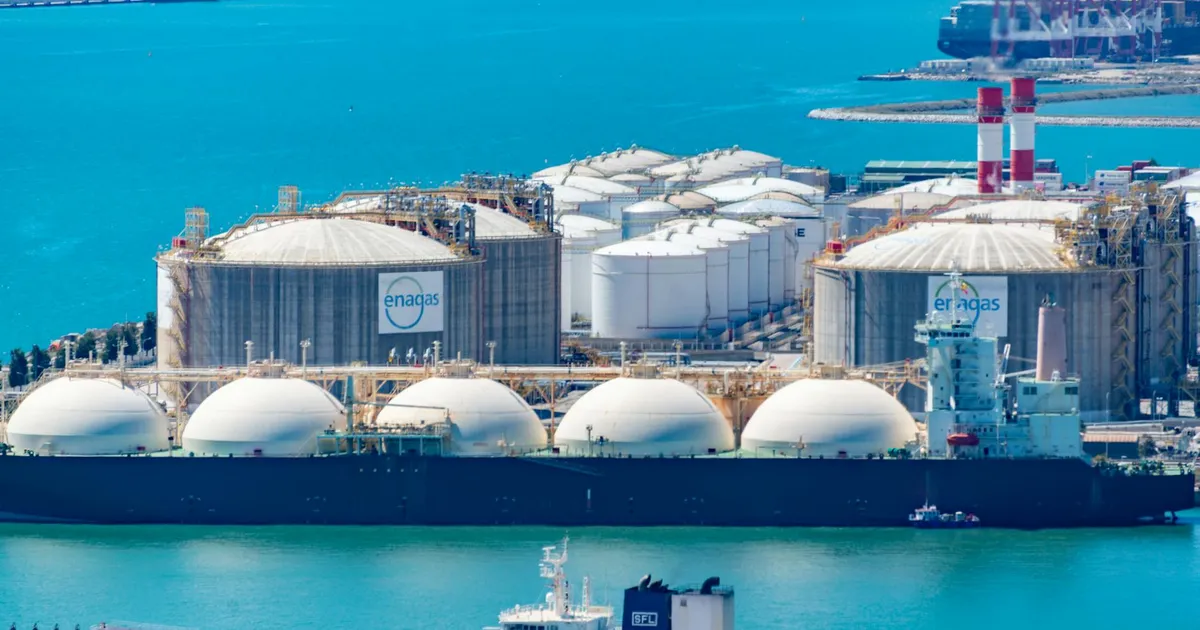
The backstop that became the strategy
New Zealand’s domestic gas supply is in structural decline, and the policy response has quietly shifted from contingency planning to permanent dependency. Cabinet agreed in September 2025 to begin procurement for a roughly $1 billion LNG import facility, with enabling legislation being fast-tracked before the next election. What was once framed as dry-year insurance is now the centrepiece of energy policy.
The origins are no mystery. The 2018 offshore exploration ban choked upstream investment. Major fields are depleting. In 2024, low hydro inflows and tight gas supplies forced coal to cover 5% of electricity generation, an embarrassing outcome for a country that generates around 85-90% of its power from renewables. The grid needed flexible backup and the gas wasn’t there.
But rushing to build an import terminal to solve a supply problem the government’s own predecessor created deserves more scrutiny than it is getting.
The government’s numbers don’t actually make the case it thinks they do
MBIE commissioned Sense Partners to model the economic impact. The results are being cited as justification for the terminal, but read them carefully. Without LNG, New Zealand’s real GDP falls $4.5 billion (0.96%) below baseline by 2035. With LNG, the hit is $3.3 billion (0.71%). That’s a 25% reduction in losses nationally, and 40% in Taranaki.
Those aren’t savings. They’re smaller losses. A billion-dollar terminal that still leaves the economy $3.3 billion behind is not a fix. It is damage control. The MBIE briefing is explicit that much of the industrial adjustment is already locked in. Sense Partners’ modelling assumes Methanex and Ballance Agri-Nutrients close by 2029 in the high-price scenario, and around 9,500 FTE jobs fall below baseline by 2032. LNG moderates the decline. It does not reverse it.
Energy Minister Simon Watts has claimed households would see net savings of around $50 per year against annual costs of $15-$30. That arithmetic only works if global LNG prices cooperate. And in early 2026, they demonstrated exactly how cooperative they can be.
Iran showed what global price exposure actually looks like
When US and Israeli strikes hit Iran, traffic through the Strait of Hormuz ground to a halt. That strait carries roughly 20% of global LNG trade. LNG prices spiked more than 1% within hours, and Goldman Sachs forecast rises of 130% if disruption persisted through March.
Victoria University’s Alan Brent, chair of sustainable energy systems, calls the strait “a key choke-point for the global energy market”. The gentailers’ own report noted that LNG-dependent markets saw extreme spikes when Russia invaded Ukraine in 2022. The Fuel Security Plan published in November 2025 already acknowledges New Zealand’s vulnerability as an island nation without domestic refining. LNG imports add another layer of commodity exposure to a supply chain running thin.
Auckland University’s Brent Young puts it bluntly: “Imported LNG displaces New Zealand’s energy vulnerability to a different point, and failure of any part of the scheme puts the country back to square one.”
The alternatives aren’t fantasy, they’re just slower
The NZ Green Building Council estimates LNG imports would cost households and businesses up to $8.3 billion over 15 years, while arguing that heat pumps and rooftop solar could save families almost $7 billion. Pumped hydro, biomass, and battery storage are all expanding. Transpower CEO James Kilty acknowledges LNG as a “transition fuel” but stresses that “transitional” is the critical word, pointing to New Zealand’s 90% renewable electricity and world-class wind resources as reasons LNG should not become permanent.
None of these alternatives solve the immediate dry-year problem. But the terminal won’t be operational immediately either. The question Newsroom poses sharply is why the government is rushing pre-election legislation for a billion-dollar terminal if it’s only a bridge.
What businesses should actually be worried about
For energy-intensive manufacturers and exporters, the relevant concern is not whether LNG is better than nothing. It is whether an electricity grid increasingly priced off Qatar spot markets represents a stable operating environment. Pulp and paper export volumes fell 41% between 2020 and 2025 as high energy costs eroded competitiveness. BusinessDesk frames LNG as breathing space, not a solution. That distinction matters.
A government that banned exploration, watched supply decline, and is now spending a billion dollars to import what it could have produced domestically is not executing a strategy. It is managing the consequences of not having one.
Sources
- Government investment in dry year risk cover: consideration of an LNG import facility – MBIE Cabinet Paper (2025-12)
- Regional and industry impacts of declining gas supply – Sense Partners/MBIE (2025-12)
- Economic impacts of declining gas supply briefing – MBIE (2025-12)
- Conflict in Iran shows ‘risk’ of government’s plan to import LNG – RNZ (2026-03)
- LNG imports: are we being gaslighted? – Newsroom (2026-03-11)
- Four alternatives to imported LNG to fix NZ’s energy crisis – Newsroom (2026-02-26)
- LNG imports would lock Kiwis into higher energy bills for decades – Scoop/NZGBC (2026-02-15)
- Gaslighting the Grid: How imported LNG fossil fuels threaten Aotearoa’s renewable future – Aotearoa AI Weekly
- LNG imports provide breathing space, not a permanent solution – BusinessDesk
- Fuel Security Plan November 2025 – MBIE (2025-11)