

The latest tombstone
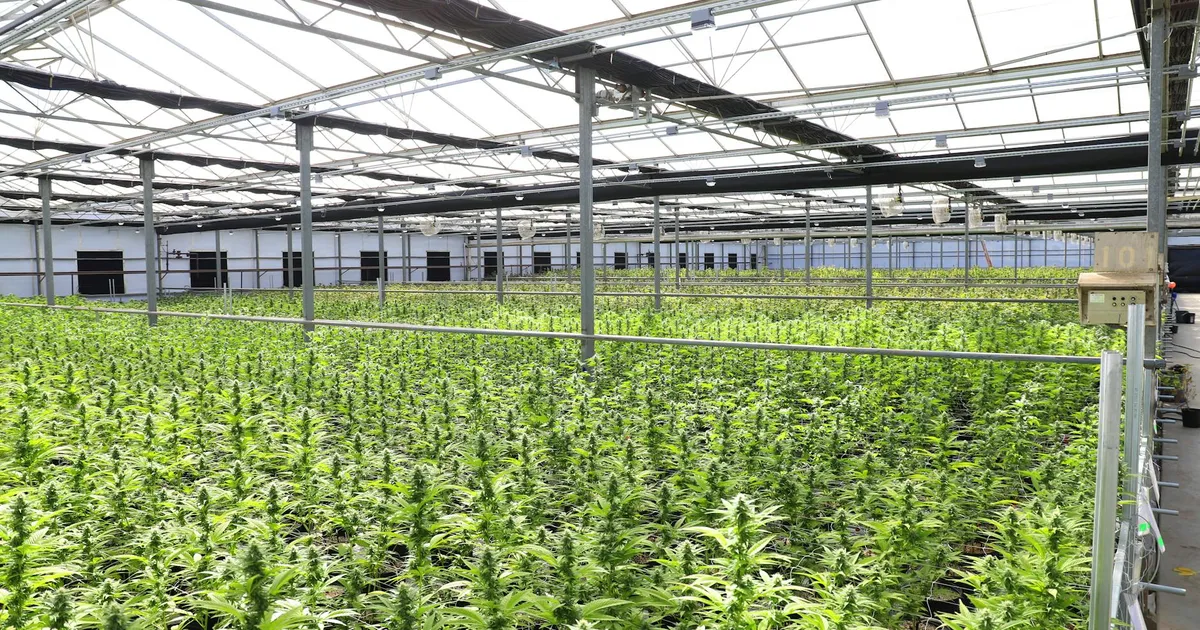
Helius Therapeutics, once the flagship of New Zealand’s medicinal cannabis ambitions, was placed into voluntary administration in March 2026 after years of trading losses. The Auckland company shut its GMP-certified East Tamaki manufacturing facility, appointed administrators from Calibre Partners, and began selling off remaining stock.
Rich-lister Guy Haddleton invested $15 million when Helius was founded in 2018. That money is now buying a wind-down. CEO Vicky Taylor called it “an incredibly difficult moment” and pointed to a commercial and regulatory environment that made it “very challenging for manufacturers to operate sustainably at scale”.
She is right about the difficulty. She is wrong about the cause.
The number that explains everything
New Zealand’s entire medical cannabis market is projected at just US$6.36 million in 2025, roughly NZ$10-11 million. Growth is forecast at 2.51% annually through 2029, adding less than US$700,000 over four years. For scale, the US market sits at US$14.97 billion, more than 2,300 times larger.
Against that microscopic revenue pool, the Ministry of Health’s licence register shows more than 40 active medicinal cannabis licensees. Dozens of capital-intensive operators, many with GMP-certified manufacturing facilities, were competing for a market that would struggle to sustain even one of them at scale.
This was not a market failure. It was an arithmetic failure.
A casualty list, not an anomaly
Helius is the latest in a string of collapses that Newsroom describes as “a death knell for the big vertically-integrated medical cannabis companies”. The sector’s body count over 2024-2026 tells the story:
- Cannasouth, the first medicinal cannabis company to list on the NZX in 2019, entered voluntary administration in March 2024 and was delisted by December.
- Aether Pacific Pharmaceuticals (formerly Medical Kiwi) entered liquidation in February 2026. Liquidators destroyed dried stock by mixing it with cat litter and coloured dye.
- Greenfern, also NZX-listed, went into receivership in late February 2026 after executives resigned.
Cannasouth’s administration in particular spooked the investor market at precisely the moment other companies were trying to raise additional capital. The dominoes fell fast after that.
Regulation was a problem but not the problem
The industry’s preferred narrative centres on regulatory burden. Taylor noted that “restrictions on market education haven’t enabled anyone in the industry to help as many patients as they potentially could”. That is fair. Five years after legalisation, GPs remain reluctant to prescribe, the black market undercuts legal operators on price, and export ambitions never materialised despite government regulatory changes.
But the original 2017 regulatory impact assessment that established the policy framework contained no commercial performance benchmarks. The government built a licensing regime focused on patient safety, not market development. And the Ministry’s ongoing guidance updates continue to refine compliance procedures rather than address commercial viability.
None of that excuses the investment decisions. Even with lighter regulation, a $10 million domestic market split among 40-plus licensees was never going to generate returns on the capital deployed. The export thesis, which justified building large-scale manufacturing, required international regulatory approvals and trade access that were years away at best. Investors treated a speculative option as a near-term revenue stream.
What survival looks like
A handful of operators remain. Ora Pharm in the Waikato, Eqalis in the Bay of Plenty, and a restructured Cannasouth continue trading. What they share is smaller scale, lower capital intensity, or a cost base reset through insolvency. The vertically integrated, export-led model that attracted the big money is dead.
The lesson for New Zealand investors is not that medicinal cannabis was a bad idea. It is that trend-chasing without market sizing is expensive. Global cannabis hype had no direct read-across to a small, GP-gated, tightly regulated domestic market of five million people. Haddleton’s $15 million, Cannasouth’s NZX listing, the dozens of licence applications, all of it was built on a fantasy about what New Zealand’s market could absorb.
The next time a newly legalised sector promises export riches and first-mover advantage, someone should check whether the domestic market can keep the lights on first.
Sources
- RNZ: Medicinal cannabis company Helius Therapeutics shuts down (2026-03-12)
- Newstalk ZB: Kiwi rich-lister Guy Haddleton’s medical cannabis company Helius Therapeutics goes into voluntary administration (2026-03-12)
- Newsroom: NZ’s big cannabis era ends with Helius collapse (2026-03-12)
- NZ Herald: Up in smoke – Why New Zealand’s medical cannabis industry is struggling to make ends meet
- NBR: New Zealand’s medicinal cannabis sector at inflection point
- Statista: Medical Cannabis – New Zealand Market Forecast
- Ministry of Health: Guideline on new medicinal cannabis product application (2025-04)
- Regulatory Impact Assessment: Medicinal cannabis (2017)