

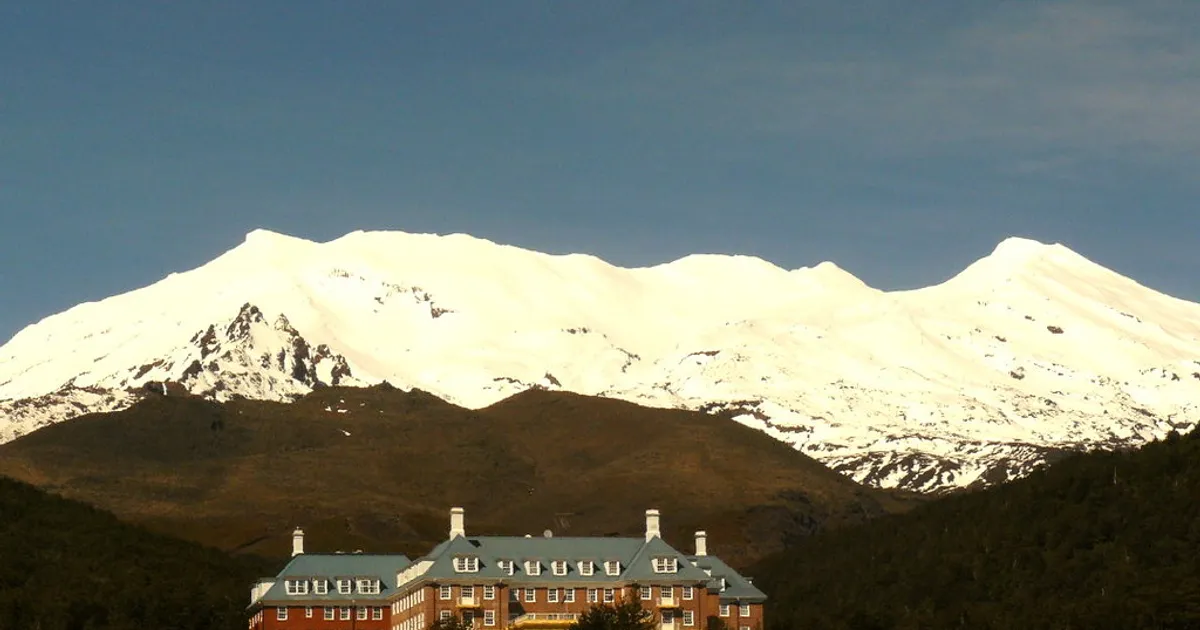
Everyone loves the Chateau. A 15,000-signature petition went to Parliament. The Ruapehu mayor called the government’s latest move “a win”. Conservation Minister Tama Potaka opened a Request for Proposals in March inviting experienced operators to pitch plans for the 97-year-old hotel. The coverage has been warm, bordering on sentimental.
But sentimentality does not pay for seismic remediation. And the single most important number in this entire saga, the cost of earthquake-strengthening a Category 1 heritage building inside a national park, has never been publicly disclosed.
The holding cost clock is already running
Chateau Tongariro has been closed since February 2023, when Malaysian-owned KAH New Zealand ended its lease and walked away rather than fund the earthquake work. The building reverted to the Department of Conservation, which has been spending approximately $2 million per year just to keep it secured and maintained. Three years of that adds up to roughly $6 million in taxpayer money spent on a building nobody can use.
Budget 2025 classified the Chateau as a fiscal risk to the Crown. Demolition was still on the table as recently as February 2026. The shift to an RFP process came only after Treasury removed the restoration cost from its list of significant Crown financial risks, not because anyone solved the problem, but because the government decided it would be the private sector’s problem.
Heritage constraints inflate every dollar spent
The Chateau carries the highest heritage classification under Heritage New Zealand. That means any structural strengthening must comply with strict conservation requirements. Engineers cannot simply bolt steel frames wherever the structure demands it. The heritage fabric constrains the engineering options, and constrained options cost more.
DOC has described the work required as “considerable investment” including earthquake strengthening and full restoration. No dollar figure has been attached. Any serious investor is therefore pricing a deal against an unquantified liability, inside a building they cannot modify freely, on land they do not own, under a concession framework that may not yet be legally workable.
Ruapehu Mayor Weston Kirton has acknowledged that changes to the Conservation Act are likely needed to enable investors to proceed. Some prospective operators are reportedly seeking concession periods of up to 100 years to justify the capital outlay. That is not a standard commercial negotiation. That is an investor telling the government the numbers only work if they effectively own the asset for a century.
The tourism case is real but the investment case is unproven
None of this means the Chateau lacks value. Before closure, it accounted for approximately 30 percent of the Ruapehu district’s hotel bed nights and employed more than 70 staff. The Tongariro Alpine Crossing draws around 100,000 visitors per year, providing a built-in demand base for premium accommodation.
But a hotel that is good for a region is not automatically a hotel that generates sufficient returns to justify an eight-figure remediation bill. The government has been explicit that restoration will not be a taxpayer expense. Every dollar of seismic work, heritage restoration, and commercial fit-out must come from private capital. That is a significant ask when the asset sits inside a national park with constrained development rights and a concession framework that may require legislative change before terms can even be finalised.
As Kirton put it: “It’s been a snail’s pace to get to this point, however we’ll take it as a win.” The honesty is refreshing. The pace is not.
A beauty parade with a ticking meter
The government deserves credit for not simply demolishing the building or throwing taxpayer money at it. Seeking private capital is the right instinct. But the RFP process, with responses evaluated from April 2026, is only the beginning of a negotiation that requires an agreed seismic cost, workable concession terms, and potentially new legislation.
Every month that process drags on is another slice of that $2 million annual holding cost. That slow bleed creates pressure to accept a deal on terms that may not be optimal. The investors who will actually bid on this are not the ones moved by nostalgia. They are the ones who can model the seismic bill, stress-test the concession terms, and determine whether premium room rates in a volcanic national park can service the capital required. Until that number is on the table, this is a beauty parade, not a transaction.
Sources
- RNZ: Proposals sought for restoration of historic Chateau Tongariro hotel (2026-03-19)
- NewstalkZB: Government opens request for proposals for Chateau Tongariro’s restoration and future (2026-03-19)
- 1News: Govt backs Chateau Tongariro restoration – mayor welcomes a ‘win’ (2026-03-19)
- NZ Herald: Government opens request for proposals for Chateau Tongariro’s restoration and future (2026-03-19)
- NZ Herald / Whanganui Chronicle: Government in talks around restoring derelict Chateau Tongariro, demolition still an option (2026-02)
- NZ Herald / Waikato News: Government opens request for proposals for Chateau Tongariro’s restoration and future (2026-03-19)
- BusinessDesk: Chateau Tongariro – Government reopens search for operator and upgrade (2026-03-19)