

Three months is not a strategy
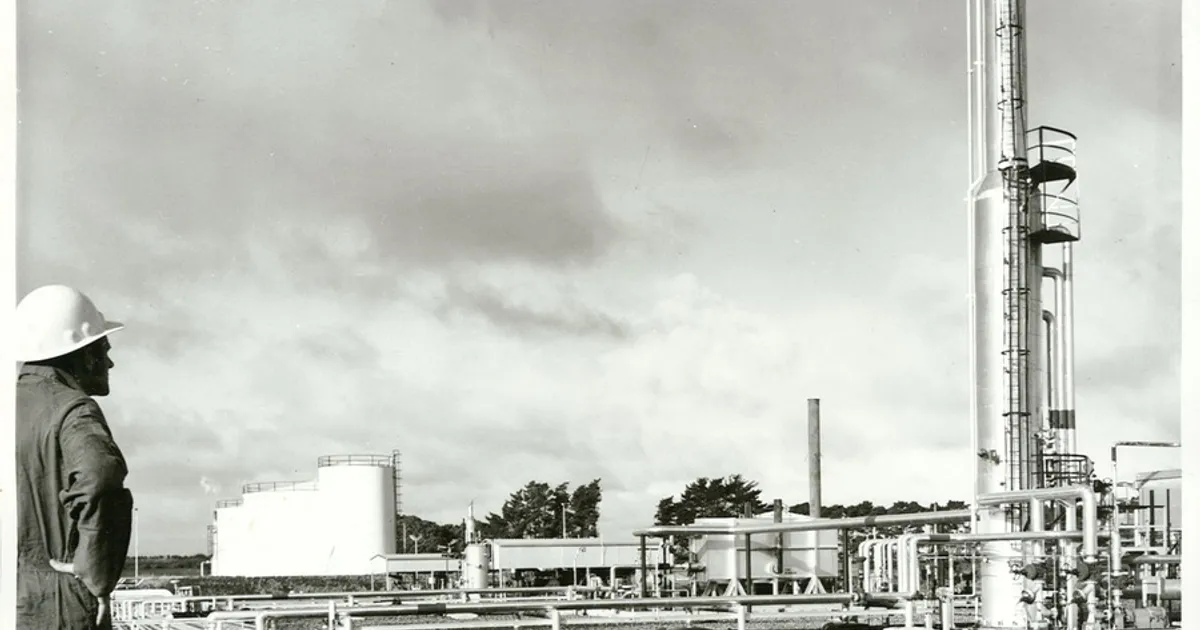
Ballance Agri-Nutrients has secured another short-term gas supply agreement for its Kapuni plant, extending operations through late March 2026. The facility, which has operated in Taranaki since 1982, produces roughly one-third of New Zealand’s urea supply, around 260,000 tonnes annually, and employs over 120 people. In August, Ballance warned publicly that a lack of affordable gas could force a shutdown. This deal pushes that cliff-edge back by a quarter. It does not remove it.
CEO Kelvin Wickham confirmed the company has been increasing imported urea and nitrogen-containing products to ensure farmer access if Kapuni production is reduced. That is an insurance policy, not a vote of confidence.
The gas market that policy broke
Kapuni’s predicament is a symptom, not the disease. Domestic gas output has almost halved in seven years, falling from an average of 415 million cubic metres per month in 2017 to 215 million in 2025. The buffer that once absorbed seasonal swings is gone.
The cause is not geological mystery. The 2018 Crown Minerals (Petroleum) Amendment Act halted new offshore exploration permits beyond a limited Taranaki area. The 2021 introduction of perpetual decommissioning liability further chilled investment. Even if new permits were issued tomorrow, offshore discoveries typically require four to five years, and up to eight to ten for complex cases, before first production. The expected crunch point between supply and demand is 2027. New gas cannot arrive in time.
BCG modelling cited by RNZ’s in-depth investigation found that in one scenario, demand exceeds available gas by roughly 10 petajoules in 2026, doubling in 2027. Even if major users like Methanex and Ballance curtail production or exit entirely, their 28 PJ of demand is not enough to restore balance later in the decade.
A BusinessNZ Energy Council survey of 66 industrial and commercial gas users found that 31 businesses had already reduced operations, increased prices, or cut staff due to rising gas costs or unreliable supply. BEC Executive Director Tina Schirr described the results as painting “an alarming picture, with significant cost pressures for users.”
The import fallback just got a lot more expensive
New Zealand’s standard response to domestic production constraints is to import more. The Strait of Hormuz crisis has compromised that plan at the worst possible moment.
Around a third of globally traded urea passes through the Strait of Hormuz, and about 45% of global urea supply could be disrupted by a closure. Urea prices in the Middle East have risen to US$650 per tonne, roughly double where they were a year ago. Rabobank senior analyst Vítor Caçula Pistóia warned there is “no clear solution to the vessel-flow in the Strait of Hormuz” and prices could remain elevated indefinitely.
Ship insurance rates have jumped from 0.15-0.25% to 1-3% of vessel value. Shipping conflict surcharges range from US$2,000 on a standard container to US$4,000 on refrigerated containers. Container Management analysis documented a $20 billion insurance backstop that could be exhausted within two weeks and 20,000 stranded seafarers.
Farmers are planning spring now, against a wall of unknowns
Federated Farmers arable chair David Birkett quantified the immediate hit: “If we see an increase in price of $1 or even 50 cents a litre that’s $2,000 to $4,000 extra a day” during harvest, when combine harvesters burn through a thousand litres of fuel daily. His framing of the spring risk is the key business planning point: “We know there is enough supply in the country for autumn. I guess for us it depends if the war continues how this will hit us in the spring.”
Fresh produce takes up to two months to grow and would be the first sector to feel higher fertiliser price impacts, while processed crops take six to nine months. Consumers will notice.
A government managing symptoms, not causes
Associate Energy Minister Shane Jones acknowledged the severity, warning that “unless things change there’ll be big challenges” by May. Finance Minister Nicola Willis is leading a newly created ministerial oversight group. Ministers have been briefed on the IEA oil reserve release plan as part of contingency planning. MBIE’s Fuel Security Plan shows the country holds just 27 days of petrol, 24 days of diesel, and 28 days of jet fuel, thin margins for a prolonged disruption.
The uncomfortable reality is that New Zealand created this vulnerability through deliberate policy choices between 2018 and 2021. The Hormuz crisis did not cause the fragility; it merely removed the margin that kept it invisible. Ballance’s rolling three-month contracts are not a company failure. They are what happens when a gas market is so tight that no supplier will commit beyond the short term. The June cliff-edge for Kapuni coincides exactly with spring fertiliser planning. Farmers who need to lock in urea supply for spring 2026 are making those decisions now, against doubled spot prices, disrupted shipping lanes, and a domestic producer operating on a rolling lifeline. That is not a supply chain story. It is a policy failure catching up with the food system.
Sources
- Farmers Weekly: Ballance secures three-month gas supply for Kapuni plant
- RNZ: Farmers fear double whammy of rising fuel and fertiliser costs from Middle East conflict
- OilPrice.com: New Zealand Faces Growing Gas Supply Risk
- RNZ: Lost in transition – The businesses trapped by New Zealand’s energy crisis
- BusinessNZ Energy Council: Gas market crisis – Industry warns of devastating consequences ahead
- The Conversation: How the Iran war could create a fertiliser shock
- NZ Herald: War-driven fertiliser shortage risks higher fresh food prices for shoppers
- SMH: Iran crisis to hit prices of bread, beer, drugs and online shopping
- Container Management: Strait of Hormuz Crisis – Supply Chain Impact Beyond Oil
- RNZ: Fuel supplies in NZ – Unless things change there’ll be big challenges
- BusinessDesk: Prepared for all scenarios – Ministers briefed on IEA oil reserve release plan
- MBIE: Fuel Security Plan – November 2025