

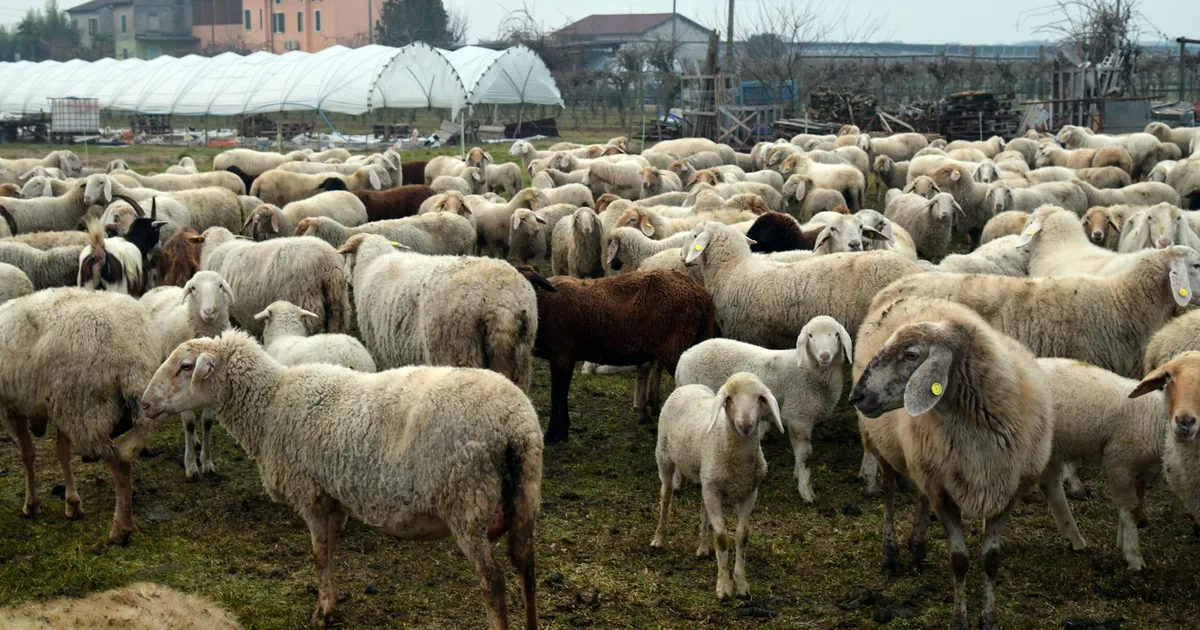
New Zealand’s export model rests on a simple promise: our animals are clean and we can prove it. For 23.6 million sheep and 243,600 pigs, that proof does not exist. When sheep change hands between farms, saleyards, and meatworks, the tracing system amounts to paper or PDF animal status declarations filled out by the farmer. No electronic record. No centralised database. No way to rapidly trace contacts if something goes wrong.
Of 38 OECD members, New Zealand is one of only 11 that does not individually trace sheep. That is not a resourcing gap. It is a deliberate choice, made repeatedly by successive governments, and it leaves the country’s largest livestock population essentially invisible to the biosecurity system.
Mycoplasma bovis was the warning shot
The 2017 Mycoplasma bovis incursion required culling more than 170,000 cattle and cost hundreds of millions to manage. A 2021 independent review found the tracing data was not just incomplete but structurally inadequate. Its conclusion was blunt: “Poor tracing data presents a critical risk to the success of any future response to a disease incursion, especially if the disease in question is fast moving (such as foot and mouth disease).”
The review recommended expanding mandatory electronic movement recording to all foot and mouth disease-susceptible species, including sheep, goats, and pigs. That was five years ago. The recommendation remains unimplemented.
Kate Acland, chair of Beef and Lamb New Zealand, has been direct about the consequences: “The only way we can eradicate something is if we can trace where the animals are and where the connections are. At the moment, we’re unable to do that with sheep.”
The agency responsible just torched $17 million
OSPRI, the private not-for-profit owned by DairyNZ, Beef + Lamb New Zealand, and Deer Industry New Zealand, runs the National Animal Identification and Tracing scheme for cattle and deer. In late 2024, OSPRI wrote off nearly $17 million after abandoning its MyOSPRI platform, a failed attempt at an integrated traceability system. The board chair resigned. Three new directors were appointed. The Stakeholders’ Council, the body that previously appointed the board, was dissolved.
OSPRI’s own annual report describes the period as “a year of reset for the organisation, particularly from a technology and finance point of view.” The organisation is now rebuilding its core NAIT system from scratch before attempting any expansion.
Andrew Reymer, Federated Farmers Waikato vice president, was unsparing: “Ospri’s inability to integrate Nait with third party software providers put the primary industry at greater risk, duplicated the regulatory load for farmers and resulted in a poor fiscal outcome for levy payers.” He also flagged that dissolving the Stakeholders’ Council removed what little formal farmer oversight existed over who runs the system.
Even the system that exists is punishing compliant farmers
For cattle and deer, NAIT is supposed to work. It often does not. A 2024 RNZ investigation documented deer farmers being fined for non-compliance because tagged animals were showing as unregistered due to software errors. Mandy Bell, chair of Deer Industry New Zealand, described the absurdity: “MPI will then send a charge out to the farmer because an animal might be deemed to not have a tag, when actually it has happened on farm, but the system is not recording this as it should do.”
The tracing infrastructure is simultaneously incomplete, unreliable, and punitive. That is not a foundation you expand. It is one you replace.
Farmers are drowning in duplicate data demands anyway
The traceability gap sits within a broader data dysfunction. Colin Hurst, Federated Farmers vice president, has described the situation across environmental and agricultural reporting: “You’ve got different government agencies, councils, and industry bodies all asking farmers for variations of the same information, but they don’t talk to each other.” One dairy farmer reported spending $20,000 to $30,000 per year on duplicated data collection across agencies.
Parliamentary Commissioner for the Environment Simon Upton has advocated for a consolidated national environmental data system for eight years and now considers it his number one priority. But no lead coordinating agency has been designated.
The risk sits on every exporter’s balance sheet
MPI’s consultation proposed three options for sheep and pig traceability, from status quo to full individual electronic identification. MPI itself acknowledged that New Zealand could be expected to follow global practice and move towards individual sheep traceability, but said “significant stakeholder work” was still needed. The government declined the centralised database.
For meat processors, dairy companies, rural lenders, logistics operators, and agri-tech firms, this is not an abstract policy question. A foot and mouth outbreak would trigger immediate suspension of meat and dairy exports to most major markets. The economic damage would run to tens of billions. The country’s ability to contain such an outbreak depends on tracing infrastructure that has known gaps, a documented history of failure, and a $17 million crater where its upgrade was supposed to be. The government has been shown the fix. It has chosen to wait.
Sources
- RNZ: MPI proposes new options to trace pigs and sheep for better disease response (2026-02-24)
- Newsroom: Officials to trace little pigs and sheep to market (2026-02-23)
- Rural News: OSPRI writes off $17m over botched traceability system (2024)
- OSPRI Annual Report 2024-2025 (2025)
- RNZ: Deer farmers frustrated over hiccups in tracing system (2024-06)
- King Country News: Feds demand an explanation (2024)
- Farmers Weekly: Farmers drowning in data demands (2025)
- Newsroom: Environment watchdog urges data fix ahead of RMA reform (2026-03-02)