

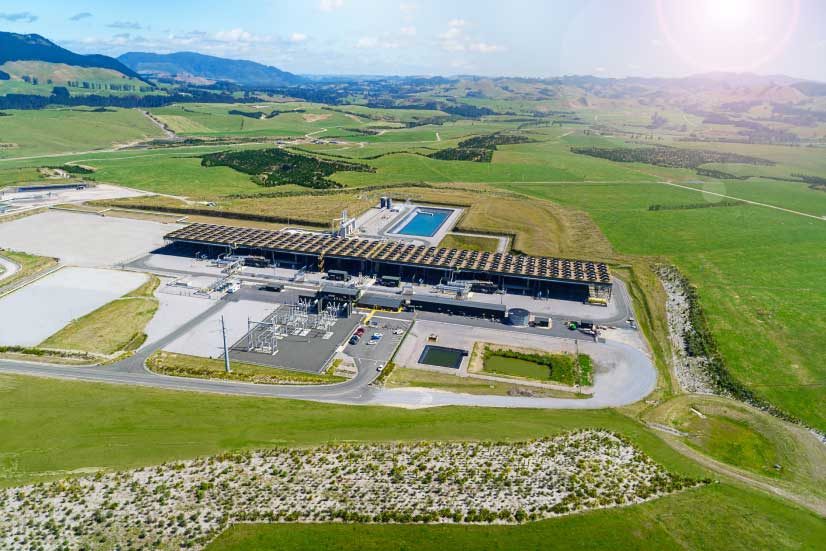
The expansion of Mercury’s Ngā Tamariki Geothermal Station in Reporoa, worth $220 million, is “90%” finished and is expected to be producing electricity by next year.
The project, which began in 2024, includes the installation of a fifth electricity generation unit at the station, known as OEC5 (Ormat Energy Converter).
The expansion will increase the station’s capacity by 46 megawatts, raising its total installed capacity from 86 MW to 132 MW. This will boost its average annual electricity output by 390 gigawatt hours, which is enough to power approximately 55,000 homes.
Upon completion of the upgrade, the total average annual generation will reach 1,120 GWh—sufficient to supply power to 158,000 average homes.
Aimee McGregor, Mercury’s programme manager for major geothermal projects – generation, explained that the Ngā Tamariki Geothermal Station generates electricity using a “binary” geothermal process. This involves using geothermal fluid to heat a secondary fluid called pentane, which is continuously heated and cooled to drive the turbine.
The turbine rotated a shaft that was linked to an electrical generator.
McGregor said the commissioning phase for OEC5 had just begun, indicating the team was confident that everything was functioning properly and prepared to introduce pentane into the system. She added that OEC5 would start generating electricity in December and be “operating smoothly” by early in the new year.
Historically, the process would release a huge amount of carbon dioxide from the ground.
“We now have technology where we are actually able to keep the CO₂, mix it in with the fluid that we’re putting back in the ground, and inject it, so it’s much better from a sustainability greenhouse gas perspective.”
Mercury was said to be the first company to achieve this with its fourth unit. McGregor explained that the company uses production wells to extract hot liquid from the ground and reinjection wells to return it back into the geothermal reservoirs.
McGregor described this as a “closed, efficient, and sustainable system.”
Over 200,000 hours of labour have been invested in the project since construction began. McGregor said OEC5’s final piping and wiring is currently underway.