

The co-op that became a cash machine
Fonterra’s first-half result is the kind of performance that makes you wonder whether the perennial complaints about the co-op model were always overblown. Net profit after tax hit $750 million on total group revenue of $13.9 billion, up $1.3 billion year-on-year. Operating profit reached $1,231 million. Return on capital from continuing operations improved to 11.2% from 10.4%. Full-year earnings guidance was lifted to 50-65 cents per share.
The farmgate milk price forecast now sits at a $9.70/kgMS midpoint, which would be the second-highest payout ever, behind last season’s record $10.16. Stack the milk price alongside a 24-cent ordinary dividend, a 16-cent special dividend, and the $2 per share capital repayment from the $4.22 billion Mainland sale to Lactalis, and Forsyth Barr senior analyst Matt Mongomerie calculates total distributions to farmers of $4.2 billion this financial year. DairyNZ puts the average per-farm benefit at around $480,000.
That is not a good result. That is a generational payout.
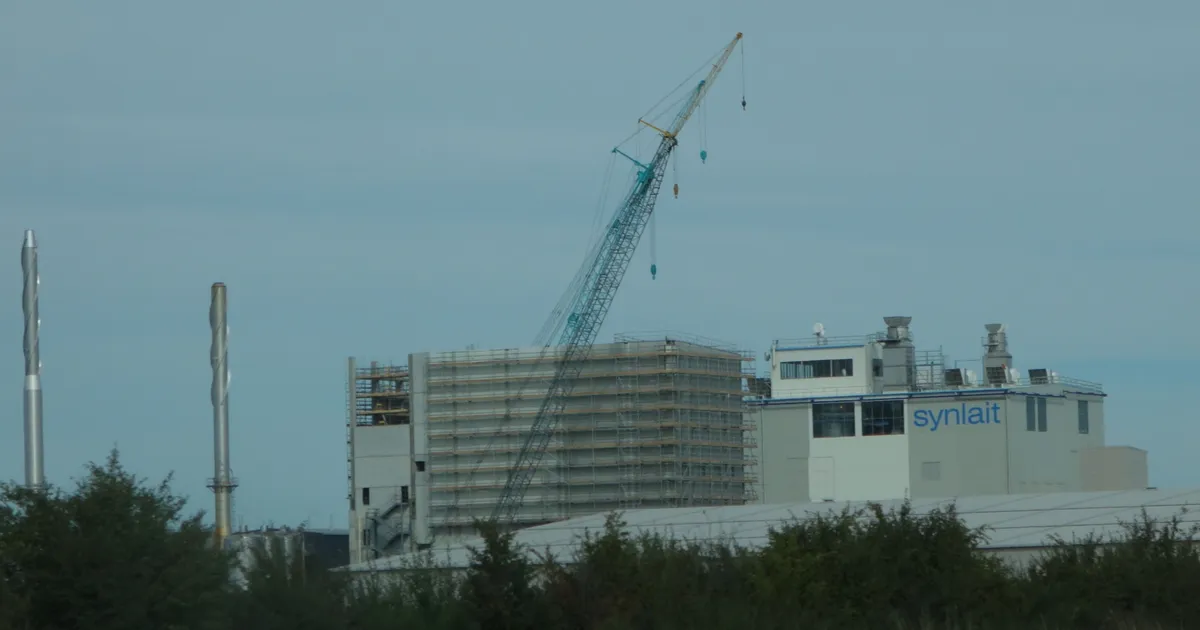
Synlait is the mirror image
While Fonterra was announcing those numbers, Synlait was guiding for a net loss of $77-82 million for the first half of FY26, compared to a $4.8 million profit in the prior period. CEO Richard Wyeth called the result “very disappointing” and said recovery would take “at least 12 months”. The company has already sold its North Island processing assets to Abbott for $300 million, a move that signals retreat, not strategic repositioning.
Synlait’s FY25 annual report showed genuine pockets of progress. Advanced Nutrition gross profit was up 29% to $95 million, Foodservice volumes surged 92%, and the Ingredients business swung from a $13.5 million loss to a $13.1 million gross profit. None of it was enough. Manufacturing disruptions at the Dunsandel plant and the structural cost burden overwhelmed the operational gains.
Same commodity prices, completely different outcomes
This is not a story about one company catching a lucky break on pricing. Both processors are operating in the same market. Global Dairy Trade prices rose 18% in early 2026 after a sharp fall at the end of 2025. Both are paying farmers roughly the same per kilogram of milksolids. The divergence is structural.
Fonterra CEO Miles Hurrell has been explicit about the source of the co-op’s resilience, pointing to “Fonterra’s well-contracted sales book” as the critical differentiator. That sales book is a function of scale: the ability to offer customers volume certainty and product range that smaller processors simply cannot match. The balance sheet reinforces it. At FY25 year-end, Fonterra reported adjusted net debt of $2.6 billion with debt-to-EBITDA of just 1.1x. That is a fortress. Synlait does not have that buffer, and the gap is widening.
BusinessDesk notes that Fonterra’s market share of milk has “steadily slipped” even as profitability accelerates. Competitors are gaining volume but not the financial strength to convert it into resilience. That paradox tells you everything about where this sector is heading.
A $4.2 billion rural stimulus
DairyNZ CEO Campbell Parker calls the $3.2 billion being returned to farmers from the Mainland sale a “game-changer” for the rural economy. He describes farmers weighing debt repayment, on-farm upgrades, expansion, and succession planning. DairyNZ head of economics Mark Storey notes that farm working expenses are forecast at $5.66/kgMS, reflecting ongoing pressure from fertiliser, supplementary feed, and a weak dollar lifting imported input costs. For most farms, though, margins will be “comfortably above break-even levels”.
For businesses in rural supply chains, equipment, finance, professional services, infrastructure, this is real money about to circulate through Waikato, Canterbury, and Southland. NZ milk production was up 1.8% by volume and 2.4% on a milksolids basis for the 12 months through January. The sector is producing more and getting paid well for it.
The winners-and-losers era
Hurrell is careful not to declare victory, noting that “global milk production remains above seasonal norms” and flagging Middle East supply chain risks. DairyNZ chair Tracy Brown adds that “cost control and efficiency remain essential”. Both are right. GDT prices fell sharply at the end of 2025 before recovering, exactly the kind of swing that exposes thinly capitalised processors.
But the caution should not obscure the structural shift underway. NZ dairy is separating into two tiers. Fonterra, with its scale, contracted sales book, and fortress balance sheet, can absorb commodity volatility and still deliver record payouts. Processors like Synlait, carrying higher costs and thinner margins, get punished by the same swings. Any business with exposure to the dairy sector needs to understand which side of that divide its customers and counterparties sit on. The rising tide has stopped lifting all boats.
Sources
- Interest.co.nz: Fonterra raises farmgate milk price again as increased profit announced
- NZ Herald: Fonterra farmers in line for $4.2b windfall on bumper dairy season and Mainland sale
- Farmers Weekly: Guidance shows Synlait marking time in red ink
- Synlait Milk Limited Annual Report 2025
- Fonterra Shareholders’ Fund Annual Report 2025 (NZX)
- Farmers Weekly: Fonterra lifts forecast on strong global milk price
- Farmers Weekly: Dairy can bank on solid revenue season
- NZ Herald: Global protein boom – Why Fonterra milk prices may stay near record highs
- NZ Herald: Fonterra lifts milk price forecast, plans special dividend
- BusinessDesk: Battle for milk – Fonterra holds relatively strong position as competition thickens