

The biggest cheque nobody’s debating
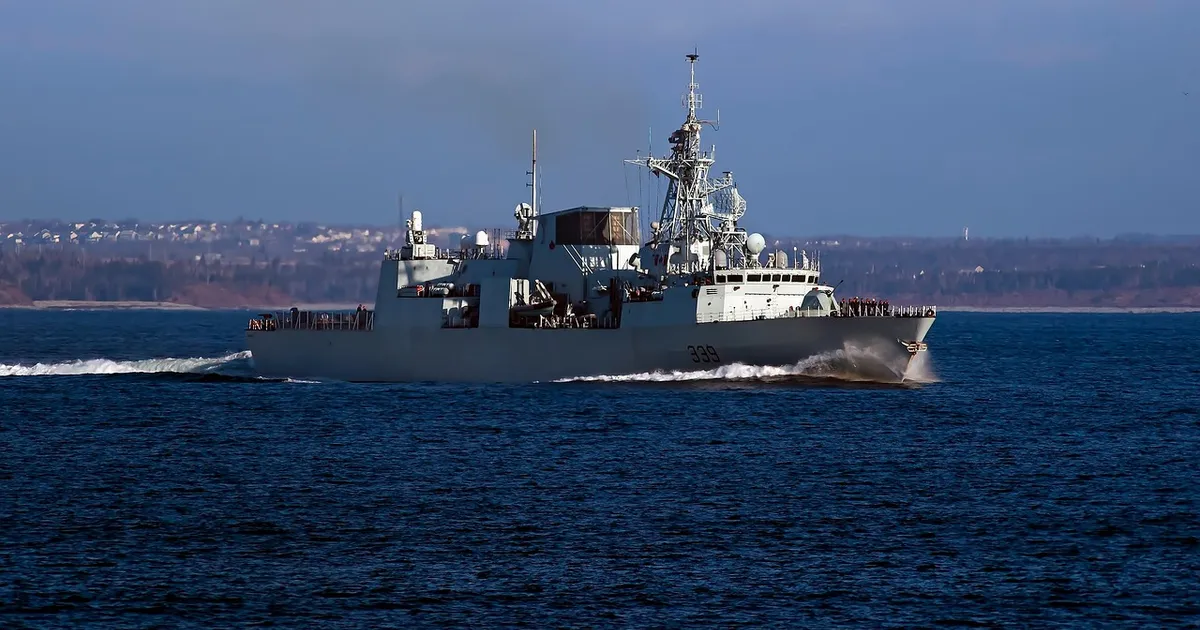
New Zealand is sliding toward the largest single procurement decision in its modern history and doing so with remarkably little public discussion about who pays for it. The 2025 Defence Capability Plan formally committed to replacing both ANZAC-class frigates with “contemporary frigates,” and Victoria University’s Centre for Strategic Studies has flagged the estimated cost at $4 billion to $6 billion. For context, total government capital expenditure in 2025/26 is projected at $18.91 billion. A single frigate programme could consume a quarter of a full year’s capital budget.
And yet, the frigate bill does not appear anywhere in Budget 2025’s $4.2 billion defence allocation. That allocation covers helicopter replacements, Boeing 757 fleet upgrades, Javelin missiles, encrypted radios, counter-drone systems and naval base work at Devonport. All necessary. None of it the main event.
Australia is doing the choosing
The March ANZMIN 2+2 meeting in Canberra produced a document titled ANZAC 2035: Operationalising the Alliance, which commits both countries to operating “seamlessly as an increasingly integrated, combat capable Anzac force by 2035.” The phrase that matters most is “common procurement and development of platforms and systems.”
In practice, that means Wellington’s frigate decision will increasingly track whatever Australia selects. Australian Deputy PM Richard Marles put it plainly at the meeting: “This is important not just because of the world today, but because both of our defence forces are growing.” NZ Chief of Army Major-General Rose King was even more revealing, describing the Defence Force as acting as “a fast follower” to Australia’s capabilities.
There is genuine military logic to interoperability. But “fast follower” is a polite way of saying New Zealand is partially outsourcing its procurement calculus to Canberra. When Australia picks a platform, New Zealand’s negotiating leverage narrows considerably.
AUKUS in everything but name
New Zealand has formally declined to join AUKUS Pillar II. But the operational reality is converging anyway. A Conversation analysis noted that the DCP 2025’s plans for long-range uncrewed aerial surveillance ($100-300 million) and space-based capabilities ($300-600 million) “align closely with the concept of multi-domain maritime awareness under AUKUS Pillar II.” Budget 2025 funds information management systems explicitly designed for intelligence sharing with partners.
The analysis concluded that “these far-reaching strategic decisions are being made largely out of public view.” That should concern anyone who thinks a $14 billion defence overhaul deserves a proper fiscal debate.
Massey University’s Dr Beth Greener offered the sharpest counter-argument: “For our allies, our greatest contribution is the fact we are not them,” particularly when spaces for negotiation are needed in a contested region. Becoming a small Australia is not cost-free, diplomatically or economically, when your largest trading partner is China.
Not all the money goes offshore
Defence spending is not purely an import bill. Christchurch-based Syos Aerospace has sold more than 140 uncrewed maritime vessels in the past 12 months, with products deployed in Ukraine and by the Royal Navy. The company is supplying the NZ army and navy with combat drones including the SA7 strike drone. Founder Sam Vye says “many countries globally are taking note and setting up their own production capacity”, positioning local firms within a reshaping global supply chain.
The Major Projects Report 2024 shows the procurement pipeline accelerating, with HMNZS Aotearoa achieving operational release and the first C-130J-30 Hercules completing its inaugural flight. For NZ contractors, engineers and logistics firms, defence is becoming a meaningful demand signal. But the large platform contracts, the frigates and surveillance aircraft, will flow overwhelmingly to international primes.
The trade-off nobody wants to name
Defence Minister Judith Collins has framed the alliance as essential, telling a Victoria University conference that “New Zealand has no stronger bond than that with our Australian neighbours.” The DCP 2025 states that personnel will be called upon “more often, in more places, and for longer periods.” The strategic case is real.
But so is the fiscal one. A $5-6 billion frigate programme on top of a $14 billion defence overhaul will require future borrowing, reprioritisation of capital spending on infrastructure, health and housing, or both. Business owners competing for government contracts, paying tax, and watching the Crown balance sheet should be asking the question the government has so far avoided: what gets cut, and when does the bill arrive?
Sources
- Factsheet: Budget 2025 Defence Funding (2025)
- Summary Tables for the Estimates of Appropriations 2025/26 (2025)
- Operationalising the Australia-New Zealand Alliance: ANZAC 2035 (2025-03-17)
- Australia, NZ boost military co-operation over decade (2025-03-17)
- Anzac ‘force multiplier’ talk risks NZ defence identity – expert (2026-03-12)
- Is NZ defence and intelligence policy aligning with AUKUS in all but name? (2025)
- Iran strikes underscore strategic intent of NZ’s new combat-proven drones (2026-03-02)
- Major Projects Report 2024 (2024)
- 2025 Defence Capability Plan (2025)