

Two times the profit, committed to one warehouse
Briscoe Group just posted record total sales of $798.8 million for the year ended 25 January 2026. Net profit came in at $59.22 million, down 2.3% on the prior year. Gross margin compressed another 114 basis points to 39.23%, continuing a slide from 42.40% just two years ago.
Those are the numbers most analysts will fixate on. They are not the story.
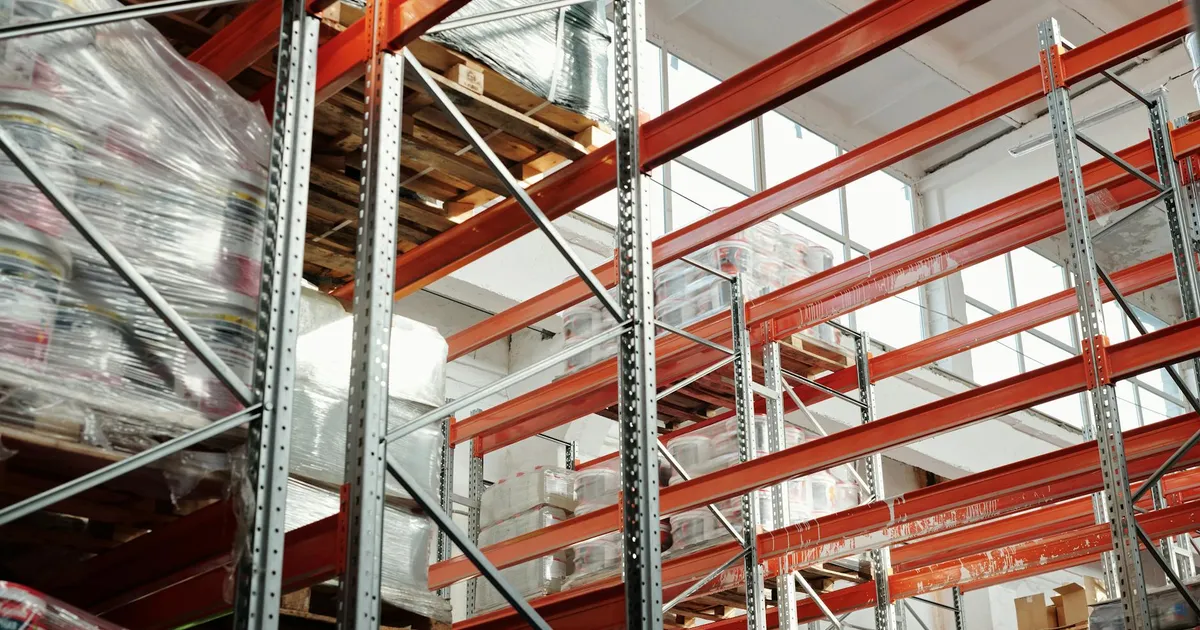
The story is that Briscoe is investing approximately $120 million in a new North Island warehousing and distribution centre at Drury, south Auckland, while generating less than half that in annual profit. The facility is 20,000 square metres, 2.5 times the footprint of the existing warehouse and twice its height, fitted with automated picking and packing robots from Austria-based Knapp. Managing Director Rod Duke is not being coy about the scale of the commitment. “We’re in a situation right now where we’ve outlasted the existing asset that we have,” he told media.
The market agreed with the logic. Shares rose 2.38% to $4.74 on the day of the result, outpacing the broader NZX 50.
Robots packing boxes is not the flex, the timing is
Automated warehousing is not novel. What makes Briscoe’s move worth watching is the counter-cyclical timing. Consumer conditions have been weak since 2022. In FY2025, the company managed $791.5 million in sales as margins compressed sharply. Duke and the board looked at that environment and decided to commit anyway.
Duke’s description of the system is practical, not speculative: “We’ve got robots that are going to dash often and find merchandise, bring it to a packer. It’ll get packed, sealed automatically, the paperwork dropped in and then put in a dispatch position.” The new centre is expected to cut 20% of the time front-line in-store staff spend managing inventory. Across a network of stores, that is a significant labour cost offset.
BusinessDesk called the project a “game changer”. Duke framed it in longer terms: “You don’t build a distribution centre like this for next quarter. You do it for the next 20 years.”
The supply chain already outgrew the ambition
This is not a speculative bet on digital growth. Briscoe’s online sales already represent 20.04% of total group revenue, up from 19.69% a year earlier. For context, the NZ retail industry average sits at 11% and the US average at 15%. Briscoe is running a digital sales mix its current logistics infrastructure was never designed to handle. The distribution centre is not getting ahead of the curve. It is catching up to one that already exists.
Duke is also layering in a 15-store ‘metro’ format rollout, smaller inner-city locations that reduce reliance on large-footprint retail. Smaller stores fed by a more capable supply chain is a coherent model, and it is the kind of structural repositioning most NZ retailers are not attempting.
Everyone else is being tactical when they should be strategic
Retail industry expert Anthony Mittelmark put it bluntly in Inside Retail NZ: “Most New Zealand retailers I talk to think they’re being strategic about growth, but they’re actually being tactical about activity.” His argument is that local retailers cannot match global players on spend, but they have advantages in “speed, proximity and context”.
Briscoe fits that framework precisely. A locally owned business making a bespoke logistics investment calibrated to its dual-brand, omnichannel model, moving faster than any global competitor could.
There is also an unexpected tailwind. Duke noted that ongoing tariff tensions between China and the West have played to Briscoe’s advantage, with Chinese suppliers locked out of the US market offering better terms to buyers elsewhere. What most NZ businesses treat as a risk, Briscoe is harvesting as a sourcing lever.
The bearish case is real but priced in
The risks are obvious. Gross margin has dropped 317 basis points in two years. Committing $120 million when NPAT is $59 million stretches the balance sheet. The DC staff will more than double to about 100 people, adding fixed costs that need volume to justify.
But Briscoe kept total cost growth to just 1.19% while pulling $8.9 million out of inventory. Group Chair Dame Rosanne Meo described the result as reflecting “the strength and resilience of the Briscoe Group business” through a year that “remained challenging for many households and retailers.”
The lesson for business owners watching from the sidelines is simple. Cycles end. The companies that own the next upturn are the ones investing through the downturn, not the ones waiting for perfect conditions that never arrive. Rod Duke has been running retail in this country for decades. He knows what a bottom looks like, and he is building on it.
Sources
- Scoop: Briscoe Full Year Results (2026-03-11)
- RNZ: Briscoe Group investing $120m in developing Auckland warehouse and distribution centre (2026-03-11)
- NZ Herald: Briscoe Group posts record $798.83m sales but annual profit slips 2.3% (2026-03-11)
- NZ Herald: Briscoe a leading light as NZ shares bounce back – Market close (2026-03-11)
- BusinessDesk: ‘Game changer’ – Briscoe Group provides details on $100m distribution centre (2026-03-11)
- Briscoe Group 2025 Annual Report (PDF) (2025)
- RNZ: Briscoe Group makes near record full year sales – $791.5m in revenue (2025)
- Inside Retail NZ: NZ retailers cannot outspend global players – but they can outthink them (2026-02-23)
- PropertyNoise: Rod Duke’s $100M Power Play – Why Briscoes Is Going Big on Property While Retail Stalls (2026)
- MarketScreener: Briscoe Group Q4 and Full Year Sales Results (2026)